 Made in Scandinavia

Complete Guide to UN3373 Transport
Safe Handling, Compliance & the Role of UN3373 Envelopes
Transporting a Category B biological substance is a highly regulated process designed to protect postal workers, couriers, the public, and laboratory staff. To achieve full compliance, organisations rely heavily on UN3373 packaging, with the UN3373 envelope serving as the critical outer layer of this protection system. In recent years, sustainable options such as 100% paper‑based UN3373 envelopes have emerged, offering both safety and environmental benefits.
This article provides a comprehensive overview of UN3373 regulations, the role of UN3373 compliant packaging, requirements for an effective UN3373 mailing envelope, disposal considerations, and reference standards.
See, feel and experience the benefits of 100% Paper UN3373 Envelopes
Order a product sample of our envelopes and kit solutions and evaluate it in your own workflow.

Regulations, Standards & Scientific Sources Referenced
UN3373 defines the classification of the substance, while ADR P650 and IATA PI650 define how it must be safely packaged and transported depending on the transport mode (road or air).
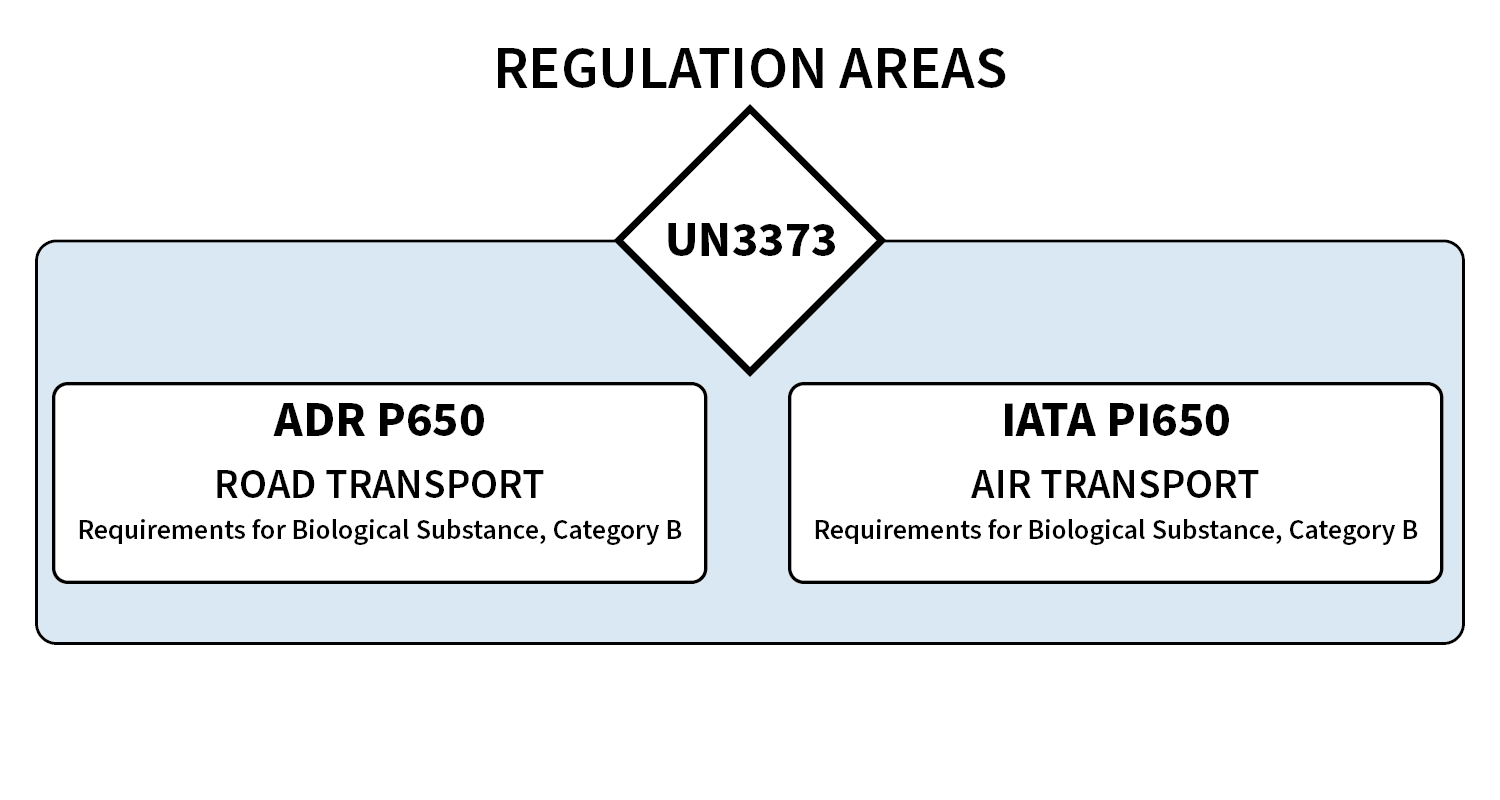
UN3373 Biological Substance, Category B – Defines the transported material category.
ADR P650 Road transport rules for Biological Substance Category B – Defines how samples must be packaged and transported by road.
IATA PI650 Air transport requirements for Category B biological substance -Defines how samples must be packaged and transported by air.
1. Regulations for Shipping UN3373 Biological Substance, Category B
Shipments containing a Biological Substance Category B must comply with international packaging rules. The two most referenced regulatory frameworks are:
- ADR P650 (Road Transport)
ADR defines how a Category B biological substance must be packaged for road transport. Requirements include a triple‑layer system, durability against vibration and temperature changes, and clear application of the UN3373 diamond mark.
- IATA PI650 (Air Transport)
IATA’s Packing Instruction 650 defines similar requirements for air transport, including 95 kPa pressure‑resistance for primary or secondary receptacles.
Across all frameworks, the core requirement remains the same:
- a safe, rigid outer packaging — typically a UN3373 approved envelope — is mandatory.
2. The Role of UN3373 Envelopes in Meeting Compliance
A high‑quality UN3373 envelope is the third and final layer in the mandated triple‑packaging system. It must:
- Protect the inner packaging from shocks, pressure, vibration, and moisture
- Meet the dimensional requirements of at least 100 × 100 mm
- Display the UN3373 diamond symbol and proper shipping name
- Maintain structural integrity after a 1.2 m drop test
- Work in concert with primary and secondary packaging to comply with P650 packaging rules
Manufacturers like GP Medical Devices provide UN3373 envelopes constructed from FSC‑certified paper designed specifically to meet these requirements.
Their 100% paper UN3373 approved envelope provides the same level of robustness as plastic alternatives while significantly increasing sustainability.
For organisations transporting a Category B biological substance, choosing the right UN3373 envelopes is essential to ensure complete UN3373 compliant packaging.
3. What Matters Most in UN3373 Packaging and UN3373 Mailing Envelopes
To comply with ADR and IATA rules, an effective UN3373 mailing envelope must incorporate several critical design features:
- Structural Rigidity
ADR and IATA require either the secondary or outer layer to be rigid. High‑quality paper‑based UN3373 packaging uses multilayer kraft paper to provide the needed strength. ECOMAX designs use six layers of FSC‑certified kraft paper for maximum durability.
- Reinforced Construction
Strongly glued side crimps and a folded (not cut‑and‑glued) bottom enhance the integrity of the UN3373 mailing envelope, ensuring consistent performance during UN3373 transport.
- Moisture Resistance
According to lab tests, embossed kraftliner paper retains surface integrity and provides sufficient humidity resistance — important for postal and courier environments.
- Compliance Markings
Every UN3373 envelope must include:
- The 50 × 50 mm UN3373 diamond
- The shipping name “Biological Substance, Category B”
- Legible lettering (≥ 6 mm)
Compatibility with P650 Packaging
Because the outer envelope is part of the P650 packaging system, it must fully support:
- Absorbent material use
- Protection of the secondary container
- 95 kPa pressure resistance (via primary/secondary container)
FedEx, which enforces IATA rules strictly for air shipments, specifically requires rigid, durable UN3373 outer packaging—further confirming the central role of the UN3373 approved envelope.
4. Disposal Challenges and Sustainable Solutions
Used UN3373 envelopes must be disposed of responsibly. Key considerations include:
- Contamination Risk
If a Category B biological substance leaks or contaminates the package, the whole UN3373 envelope must be treated as clinical waste.
Plastic Waste vs. Paper‑Based Solutions
Traditional UN3373 packaging often uses plastic mailers (LDPE).
However, FSC‑certified paper UN3373 envelopes reduce environmental impact and can enter normal paper recycling streams when uncontaminated.
This makes them the preferred option in modern, sustainability‑focused healthcare systems.
Volume Efficiency
Paper envelopes compress more efficiently than plastic mailers, reducing clinical waste volume and lowering disposal emissions.