 Made in Scandinavia

Different People – Different Challenges
UN3373 envelopes must meet the needs of several distinct user groups, each facing different challenges.
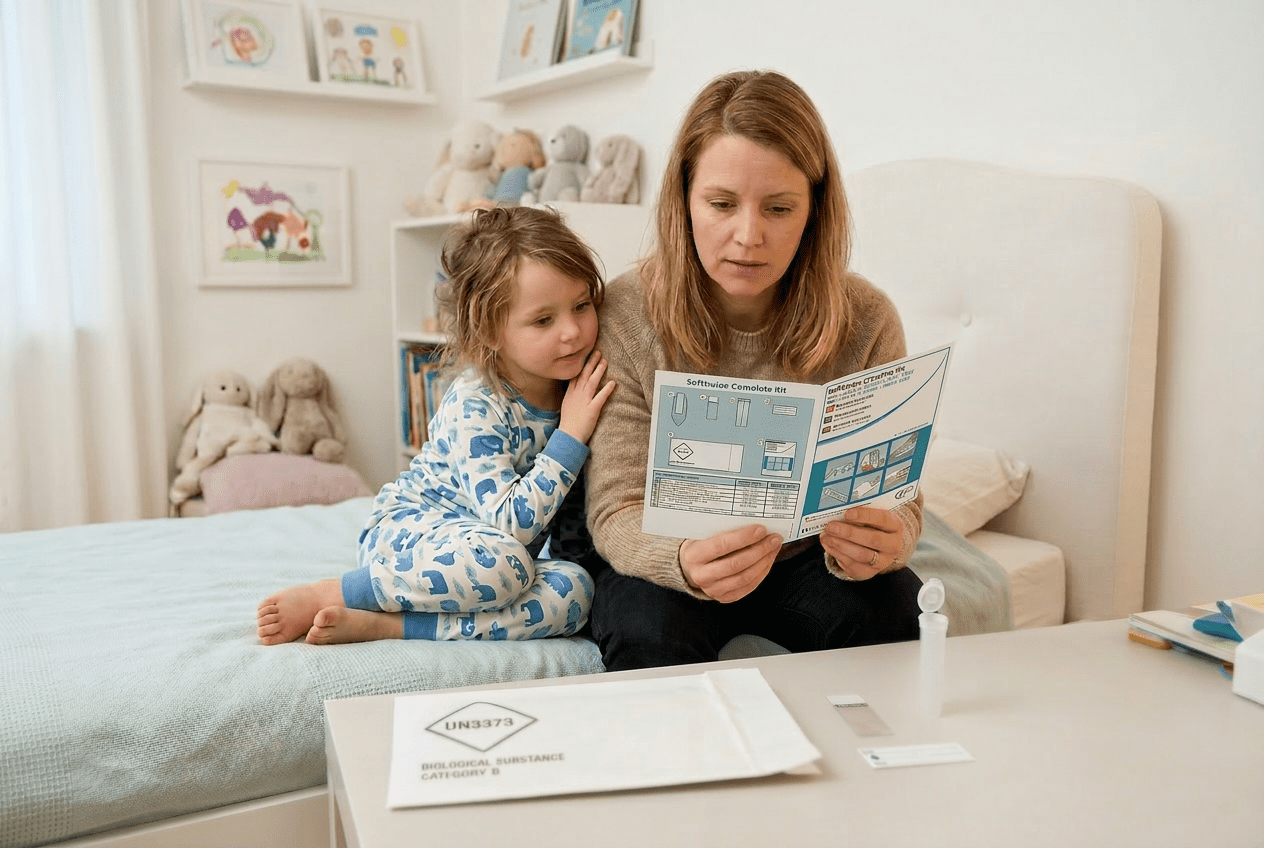
Parents and children often interact with the packaging in a home environment. They require simple, intuitive solutions that reduce uncertainty in handling biological samples. Clear instructions, safe containment, and easy sealing are essential to ensure correct usage and avoid errors.
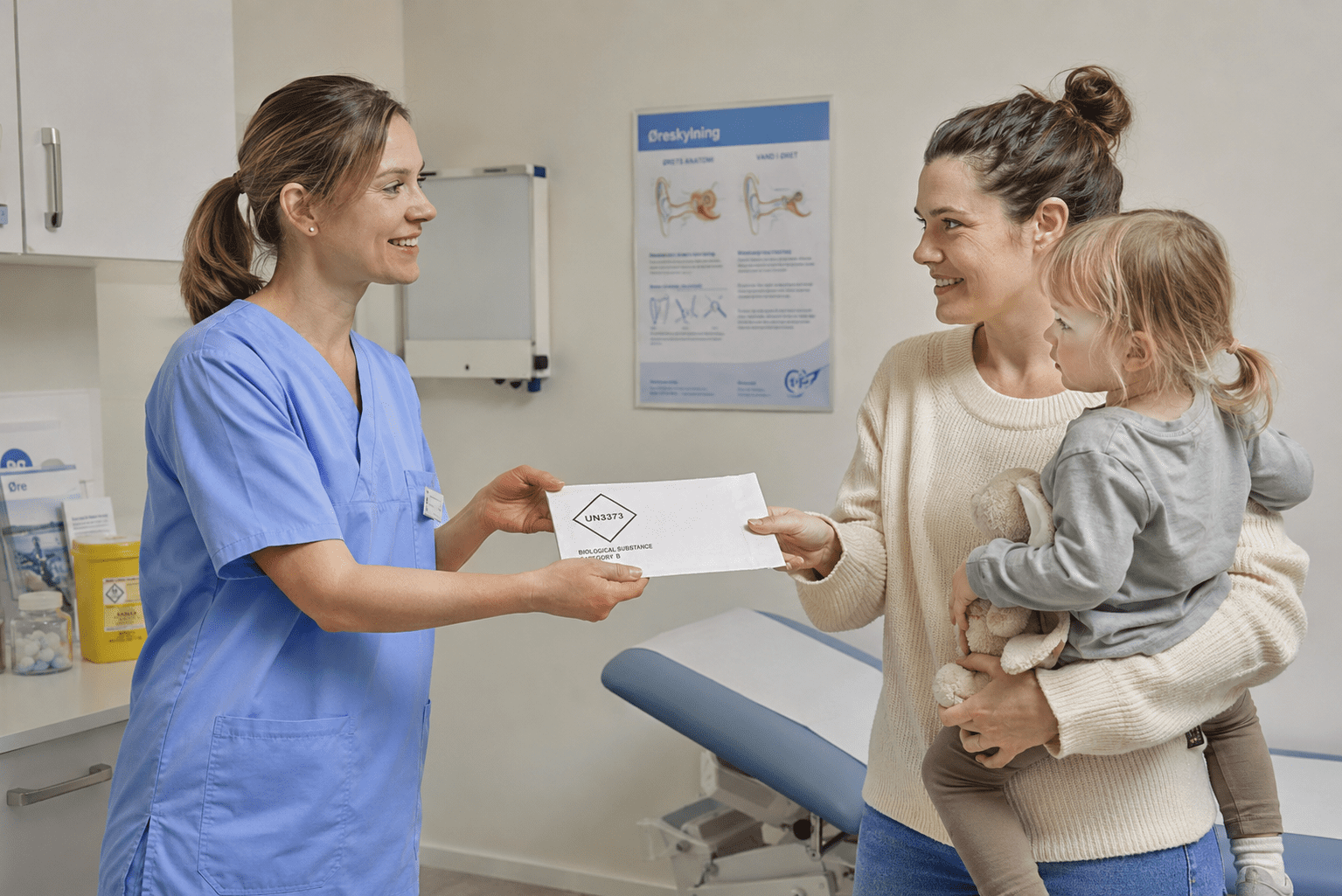
Doctors and nurses, working in time‑pressured clinical environments, need packaging solutions that are reliable, compliant, and quick to use. The packaging must support efficient workflows while ensuring that regulatory requirements are consistently met without adding complexity.
Laboratories depend on receiving samples in optimal condition. For them, the key challenges lie in ensuring sample integrity, minimizing handling time upon arrival, and managing the large volumes of packaging waste generated through diagnostic workflows.
Solving one problem - should not create another
100% Paper UN3373 Envelopes benefit- the individual stakeholders and the broader health system and society.
Across the entire system, the shift to paper packaging will assist in improved efficiency, reduced environmental impact, and will supports coordinated healthcare workflows.
Patients
Doctors and nurses
Laboratories
The Importance and Benefits of Using 100% Paper UN3373 Envelopes in Healthcare Logistics
For hospitals, clinical laboratories, and diagnostic screening programs, the safe transport of biological samples classified as UN3373 – Biological Substance, Category B is operationally critical.
Packaging used for these samples must comply with the ADR P650 requirements for road transport and equivalent IATA PI650 requirements for air transport.
These regulations mandate a triple‑layer system: a leak‑proof primary receptacle, a leak‑proof secondary container, and a rigid outer packaging that must withstand vibration, humidity, temperature changes, and a 1.2‑meter drop test without compromising containment.
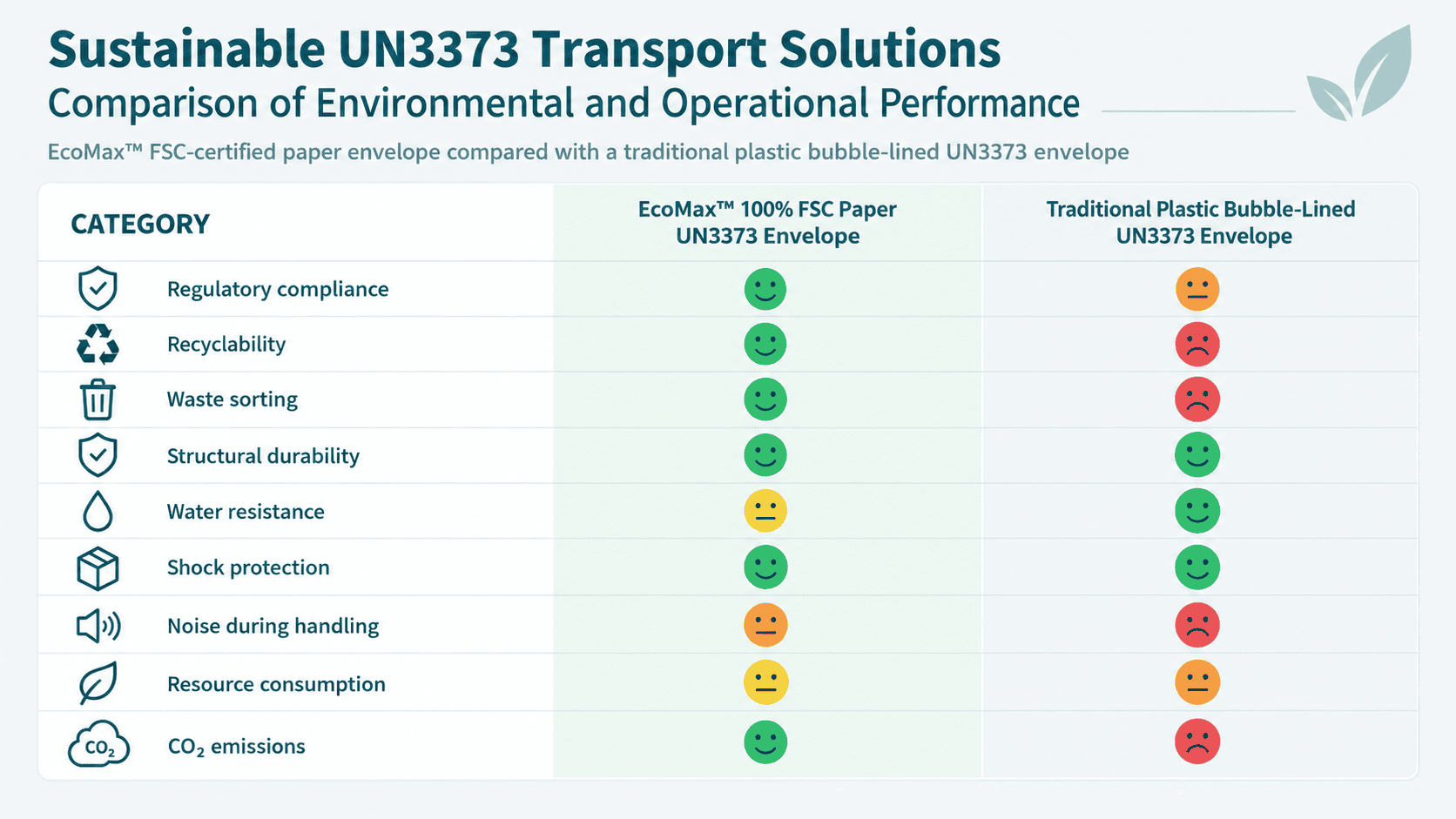
Traditionally, many healthcare organisations have used plastic bubble‑lined envelopes as the outer packaging layer. While they meet the structural requirements for UN3373 transport, they introduce environmental and waste‑management challenges.
Plastic bubble envelopes combine multiple materials—LDPE plastic film and internal bubble cushioning—which makes them difficult to recycle and typically leads to disposal as mixed clinical waste.
By contrast, 100% FSC‑certified paper UN3373 envelopes offer a compliant and more sustainable alternative. These envelopes provide the required rigidity and durability for Category B sample transport and are expressly designed to withstand the mechanical stresses found in hospital and laboratory logistics. GP Medical Devices’ 100% paper envelopes use multilayer kraft structures that deliver strength comparable to or exceeding plastic-based packaging.
A key operational advantage for healthcare institutions is simplified waste handling. 100% paper envelopes can be disposed of directly in the paper waste stream when uncontaminated, eliminating the need for separation or special handling steps.
Plastic bubble envelopes typically cannot be separated into recyclable components, making sustainable disposal impractical.
Hospitals and laboratories, which generate substantial volumes of UN3373 packaging, therefore benefit from reduced waste‑management costs and lower environmental impact.
Sustainability has become an increasingly important criterion in healthcare procurement.
Many health systems now incorporate environmental performance indicators in purchasing decisions, and 100% paper‑based UN3373 envelopes align naturally with these objectives. Paper envelopes support reduced CO₂ footprints due to their material composition and lower production energy requirements compared to plastic.
From a compliance perspective, both paper and plastic envelopes can meet P650 requirements when properly designed. Yet the shift toward fully paper‑based UN3373 outer packaging offers hospitals and laboratories an opportunity to maintain full regulatory conformity while improving environmental performance, simplifying waste workflows, and supporting broader sustainability commitments.
As diagnostic volumes grow—especially through programs such as bowel‑cancer screening and patient‑initiated sample return systems—the operational and ecological benefits of switching to 100% paper UN3373 envelopes become increasingly significant.
Reduce waste, cut environmental impact, and maintain full UN3373 compliance.
100% paper envelopes make sample transport safer, cleaner, and easier for hospitals and laboratories.
A Low Hanging Fruit for Environmental Leaders in Public Healthcare – 100% Paper UN3373 Envelopes
For environmental leaders in public healthcare, shifting to 100% paper UN3373 envelopes represents one of the simplest, most immediate opportunities to reduce environmental impact without altering clinical workflows.
This change maintains full compliance with mandatory transport rules for Biological Substance, Category B, while significantly improving recyclability and lowering waste‑management burdens across hospitals and laboratories.
Healthcare institutions handle large volumes of UN3373‑classified diagnostic samples daily.
International regulations such as ADR P650 require a triple‑layer packaging system and a rigid outer envelope capable of withstanding vibration, temperature changes, humidity and a 1.2‑meter drop test.
Traditionally, outer packaging has often been plastic bubble‑lined envelopes. While compliant, these envelopes consist of mixed materials—LDPE plastic with bubble padding—that are difficult or impossible to recycle, and therefore routinely end up as mixed or clinical waste.
In contrast, 100% FSC‑certified paper UN3373 envelopes provide full regulatory conformity while enabling healthcare organisations to reduce reliance on fossil‑based materials.
Multi‑layer kraft‑paper designs deliver the required structural strength for safe sample transport. Because they are single‑material products, paper envelopes can be placed directly in recycling streams when uncontaminated, supporting national circular‑economy and climate objectives.
For environmental policy implementers, the benefits are practical and system‑wide: reduced incineration volumes, lower carbon footprints, and alignment with public‑sector procurement requirements that increasingly prioritise sustainable materials. Importantly, the change introduces no operational disruption—paper envelopes integrate seamlessly with existing laboratory and courier workflows while maintaining full adherence to ADR P650.
Because of its regulatory neutrality and clear environmental advantages, adopting 100% paper UN3373 envelopes offers the public healthcare sector a low‑complexity, high‑impact step toward greener logistics—precisely the type of measurable improvement sustainability leaders are tasked with delivering.
Why 100% Paper-Based UN3373 Envelopes ?
Because the Environment Matters !
Try out our UN3373 Envelopes
See, feel and experience the benefits of 100% Paper UN3373 Envelopes
Order a product sample of our envelopes and kit solutions and evaluate it in your own workflow.